Nick Cohen
already had a fearsome reputation as a columnist on the Observer – ‘intelligent, angry and totally sincere’, said the Spectator – when Simon Joseph Jones and Huw Spanner met him in a pub in central London on 22 February 2006.
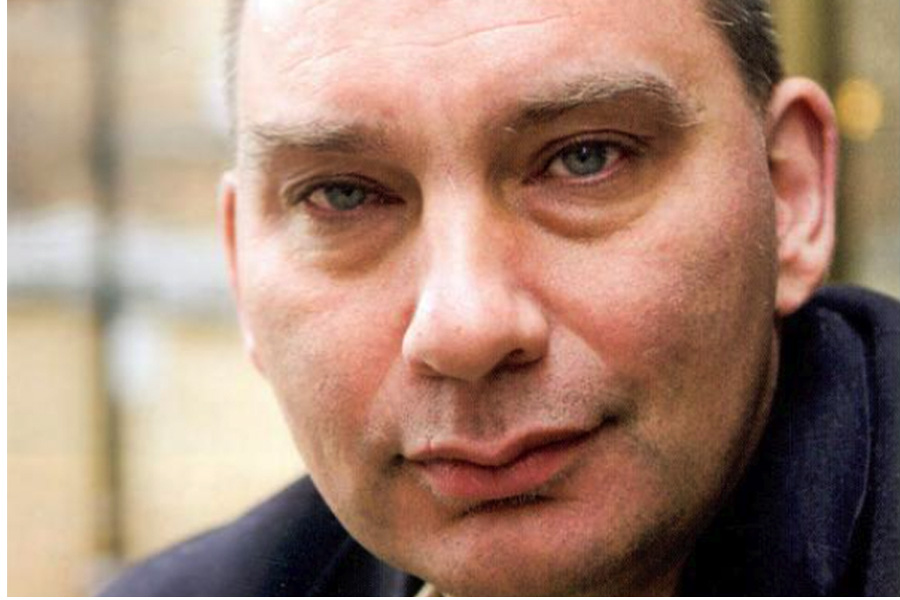
Photography: Geoff Crawford
Can you tell us a bit about your family background? It was an odd mix of politics and religion, wasn’t it?
My mother’s from a Presbyterian family – my great-uncle Willy was very high up in the Church of Scotland. On my father’s side, my grandad rejected Judaism and became a communist. His brother was so convinced that he emigrated to Moscow in 1936. My family’s religion is really socialism.
The trades union movement, the co-op movement – a lot of that tradition comes from religion and is very religious. The socialism of the 20th century was a full religious faith. There were socialist Sunday schools. The communist side of my family believed in a kind of Bible far more strongly than the Presbyterian side – and it was the full Book of Revelations: there would be this struggle between the proletariat and the bourgeoisie and, when it was over, there would be paradise on earth for a thousand years. It was St John the Divine.
So, that was the atmosphere I was brought up in: very, very left-wing, militantly atheist. But, funnily enough, I went to a Church of England school. I quite like the C of E, even though it’s the Guardian at prayer and all that.
Have you ever been tempted to be religious?
I’m the type of atheist who can never forgive God for not existing. If I actually were religious, I’d be the most awful fundamentalist – Don Cupitt1The ‘radical theologian’ most famous as the author of The Sea of Faith (BBC Books, 1984) would look on me and despair. If I could have, I would have believed in the literal truth of the Bible as the word of God, you know what I mean? You would not have liked to have met me in the 17th century.
So, what were the enduring values that this strange mix of the hard left and the C of E gave you?
One reason why the left always loses is, it’s very uneasy with patriotism. You can say that lots of things are wrong with your country, but if you give the impression that you don’t actually like it…
A huge suspicion of people in power, I would say. A strong emphasis on dissent, a strong emphasis on individual liberty – that very English liberty, trial by jury, presumption of innocence. A huge emphasis on what people in this country won through their struggles – that’s very important. Something like ID cards I have an almost patriotic revulsion against: it’s not the way we do things in this country.
With the Communist Party, my parents had a funny relationship. I was brought up to read Solzhenitsyn and all that, but still you didn’t think of communism as what it was: one of the most terrible things of the 20th century, as bad as Fascism – worse, if you start counting the bodies.
‘Patriotic’ is an unusual word to hear from the left.
Well, that is one of its great weaknesses, of course. One reason why the left always loses is, it’s very uneasy with patriotism. Obviously you can say that lots of things are wrong with your country, lots of things need reform; but if you give the impression that you don’t actually like it, your fellow countrymen and women are very unlikely to vote for you.
But actually a lot of people on the left are quite patriotic. The history of the left in this country is a peculiar narrative that has built up from the Peasants’ Revolt and it’s a very English phenomenon.
Presumably George Orwell was a significant influence on you.
Yes, very, very significant. And E P Thompson.
Do you have a tendency to fundamentalism now?
Well, no, my thinking at the moment is in total flux – I am having to rethink all my thoughts on what it means to be left-wing now. I’m still stunned by the reaction of the world’s liberal left to Iraq, which I found truly shocking. All the time I’d had this picture in my mind of the left as basically decent people – I mean, stupid of me! When you look at the history of the 20th century, there are monsters on the left as well as the right, but I didn’t realise that those currents were still going.
You opposed the war on Afghanistan after ‘9/11’, but then your perspective changed…
With Afghanistan, I was doing [to Tony Blair] what a lot of people have done to George Bush: I wanted to tell him that I loathe him – and, OK, there are people in Afghanistan living under the most disgusting regime, but I don’t want to think about that.
There is a postmodern theory that what people hate is the ‘other’. Complete tosh! What we hate is what we know. It’s Freud’s ‘narcissism of small differences’.2Sigmund Freud coined this term in a paper published in 1917. He said that we reserve our most virulent emotions – aggression, hatred, envy – for those who resemble us the most, the ‘nearly-we’. So, I loathed Blair more than I loathed the Taliban. I’d be more upset if the Tories won the next election than if al-Qa’ida took power in Iraq. It’s dumb, but that’s how people think, and that’s how I was thinking at that time.
Blair said: The left is utterly shameless. And I thought, ‘He’s right. It is.’ The classic example was [the First Gulf War, between Iraq and] Iran, when Saddam was America’s de facto ally and the left wept buckets for the people of Iraq. The minute he invades Kuwait and becomes America’s enemy, the left dropped the Iraqis like a shot. It was one of the most shocking things in modern left-wing history.
Liberal opinion has become quite disillusioned with democracy in some ways. The working class, the electorate, hasn’t turned out the way all the great reformers of the early 20th century thought
You described the people who marched against war in 2003 as ‘well-intentioned’ but ‘gormless’, and yet you had taken a similar position scarcely more than a year earlier.
That’s because of who they were being led by and manipulated by. If it had happened on the right, if the Countryside Alliance had been led by the [British National Party], all hell would have broken loose. People said, ‘I’m neutral. It’s not in my name,’ but these things have consequences. The leadership of the anti-war movement was – is – actively supporting a totalitarian movement of the extreme right.
Obviously there were loads and loads of good reasons to be against the [2003] war, loads of reasons to tear into Bush and Blair, but I kept thinking, ‘When’s the support for Iraqis going to come?’ and it never did. And now when you hear someone slagging off Iraqi democrats – including Iraqi socialists – or defending the most vile doctrines of Islamic theocracy, you can almost guarantee that they will count themselves as being on the left. It’s weird.
If you are Jalal Talabani,3President of Iraq from 2006 to 2014 who is an English-speaking socialist, you look across the world at people who call themselves ‘liberal’ or ‘socialist’ and feel the malice coming towards you. It has undermined the progressive forces in the world. You know, the insurgents in Iraq can say, ‘Even your own friends want us to win.’
Why do you think that has come about?
I think it’s a lot to do with the death of socialism. Essentially, the Nineties saw the end of socialism as a viable programme for the human race. Nowhere on earth is there a political movement that believes in the way people believed in the 20th century that we can take power, either democratically or dictatorially, and transform society from socialist principles. People don’t believe that any more.
And that loss is a bit like [Matthew] Arnold’s ‘long, withdrawing roar’.4Referring to the slow ebb of Christian faith in ‘Dover Beach’ (1867) I think that liberal opinion has become quite disillusioned with democracy in some ways. Things haven’t turned out the way they thought. The working class, the electorate, hasn’t turned out the way all the great reformers of the early 20th century thought. So, I think there’s an indifference to suffering, and an absence of any political programme for people. If the Iraqi parliament were to turn to people who call themselves ‘left-wing’ and say, ‘What do we do? We’ve got a country here – tell us how to run it!’ they wouldn’t get a coherent answer.
Take Naomi Klein, for example. She has nothing to offer except for opposition to what in the jargon is called ‘the hegemon’, which sort of means America but actually is something far more diffuse – it means liberal democracy, it can mean human rights. It’s modernity that they’re against, and it’s an entirely barren approach because no positive policies come out of it.
Now, contrast that with the socialists of the 20th century, whether they were democratic socialists or communists. Like Klein, Noam Chomsky, Michael Moore, they would go on and on about hypocrisy, but they would have something more to say – they would have a coherent message of hope. There is no such thing emerging from the likes of Klein.
Roy Hattersley said much the same about your last book, Pretty Straight Guys:5Published by Faber and Faber in 2003 ‘a devastating assault on New Labour and its Project, but it does not provide the slightest idea of what Cohen would like to put in its place.’
Blair has done an awful lot that is good, actually, and so has Brown; and people are going to miss them when they’re gone. I guiltily include myself among them
It’s a fair point. My next book will finish with my prescription for Iraq. There you go.
What is your prescription?
I haven’t worked it out yet. It’s probably going to be quite a minimalist programme. What happened in the Soviet Union and China is just so awful – and in Ethiopia and in Vietnam and in Cambodia – it’s a lion in the path that, if you think at all in utopian or progressive terms, is very hard to get round. It teaches you a wariness of grand schemes, the virtue of smallscale reform rather than revolution. If you don’t believe in democracy, you’ve learnt nothing from the 20th century.
Is there a particular country that you think has got it more right than anyone else?
Oh, I think our country’s got lots of things right, actually. We have quite a competitive economy, a good welfare state, a Human Rights Act. We have religious tolerance. These are things people fought and died to get. We shouldn’t dismiss them lightly.
Why have you been so hostile to New Labour?
You know, when Blair took over as Labour leader in 1994 he got an absolutely adulatory press – there was a huge consensus that he was God; and I’m the type of journalist who when I see something like that I think I’ve almost got a duty to say, ‘Hold on a second!’ I mean, I hope I’m not a contrarian…
Also, certain things stuck in my craw. They began attacking civil liberties, basic things that people on the left had fought for – trial by jury…
But I’m far fairer to the Government now, because I’m so dubious about their critics. Blair has done an awful lot that is good, actually, and so has [Gordon] Brown; and people are going to miss them when they’re gone – and I’m guiltily including myself among them. I live in the north London world of the upper-middle-class left and it’s one thing for us to go on about Blair at our dinner parties and do everything we can to undermine him, it’s quite another for poor people, who have benefited hugely under this government. There have been huge transfers of wealth, not so much from the very rich (who just don’t pay taxes any more) but from the upper middle class to the respectable working class, if you like. If you are a woman with children and work, this government has done everything it possibly can to make your life better. So, there you go.
You first broke ranks with the consensus against invading Iraq in 2002, but I think you have said that what really shaped your thinking was Paul Berman’s 2003 book Terror and Liberalism.6Published by W W Norton & Co Is that right?
Well, I was already very interested by what Christopher Hitchens7The British-American polemicist and public intellectual (and brother of Peter Hitchens). He died in 2011. was writing. But Berman’s book puts it into the context of the struggle against totalitarianism in the 20th century. Ba’athism and Islamism flow on from Fascism in particular (though Saddam’s personal style was modelled on Stalin).
For me, the key value is solidarity. You talk to people in the poor world, you treat them as equals, you listen
But also Hitchens said, ‘Nick, you’re meant to be socialist. There are some Iraqi socialists in London, go and talk to them!’ And when you start talking to people from the poor world who actually share your beliefs… For me, the key value is solidarity. You talk to people in the poor world, you treat them as equals, you listen to them.
Hitchens prides himself on being a contrarian.
Well, what I say to myself is: ‘Have I been entirely consistent?’ I’ve consistently supported democratic socialist principles, but (if I’m really levelling with you) if the middle-class London liberal media consensus says one thing, I start getting very restive. I am very wary of that Eighties generation of the liberal left. They haven’t produced very much. A lot of them went off into infantile far-left politics and I don’t think they’ve done a lot of good.
Bertrand Russell said that everyone ought to go to prison once for their beliefs, which is going a bit far, perhaps; but everyone on the liberal left ought to experience being outside the liberal consensus on one big issue. You learn an awful lot and you start having a lot of sympathy for other people. I started having a lot of sympathy with the Catholic Church on abortion because of Iraq, funnily enough, even though I don’t agree with them.
I mean, you suddenly start noticing how biased the BBC is. When you’re inside the liberal consensus, the Tories say, ‘The BBC’s bloody biased’ and you think, ‘Don’t be silly! Of course it’s not.’ But let’s take abortion. I don’t happen to share it, but there is an entirely coherent moral argument against abortion. Now, suppose you hold that, you will notice that on the Today programme, for instance, a pro-abortionist is never, ever given a hard interview but an anti-abortionist is.
You are regarded as a polemicist. How do you react to the charge that there is a lot of spin in your writing? You use a lot of loaded language.
Well, what I hope I do – I mean, obviously failing in your case – I hope, because I trained as a news reporter, that I present you with a lot of facts, so that even if you don’t agree with me for a moment, there are things you need to think about. I do like to get a lot of research in. But, you know, sometimes it works, sometimes it doesn’t.
It’s not really a matter of facts. For example, some years ago you wrote about Mr Blair going to [the annual evangelical Christian festival] Spring Harvest and the way you characterised the sort of people who go to that festival was a caricature. You portrayed them as grinning religious airheads.
You know, I’m far less willing now to write about things I don’t know. I’ve never been to Spring Harvest and you shouldn’t write about what you don’t know. ‘Go and see!’ is always the best advice.
Have you been to Baghdad since the war?
I’m meant to be going. I’ve got a standing invitation to go to loads and loads of places, and there’s lots of people I want to go and see – some of them are old friends who are now in power. So, I ought to go, I ought to go. The problem was, my wife had a baby in the middle of it all, and at the moment I have got so much work on. But that’s going to calm down soon, so I’ll go and see old Jalal…
I think it’s partly from getting older, but partly from just being morally offended by a lot of what’s been going on on the left these past few years, I’ve become far more aware of moral complexity. If I were to write about Spring Harvest again, I hope it wouldn’t be the same piece.
This edit was originally published in the April 2006 issue of Third Way.
To make sure you hear of future interviews in this series, follow High Profiles on Facebook or Twitter or join our mailing list.
| ⇑1 | The ‘radical theologian’ most famous as the author of The Sea of Faith (BBC Books, 1984) |
|---|---|
| ⇑2 | Sigmund Freud coined this term in a paper published in 1917. He said that we reserve our most virulent emotions – aggression, hatred, envy – for those who resemble us the most, the ‘nearly-we’. |
| ⇑3 | President of Iraq from 2006 to 2014 |
| ⇑4 | Referring to the slow ebb of Christian faith in ‘Dover Beach’ (1867) |
| ⇑5 | Published by Faber and Faber in 2003 |
| ⇑6 | Published by W W Norton & Co |
| ⇑7 | The British-American polemicist and public intellectual (and brother of Peter Hitchens). He died in 2011. |
To find out more about the agenda behind our interviews, read our manifesto. To access our archive of more than 260 interviews, see the full list.
Biography
Nick Cohen was born in 1961 and educated at Altrincham Grammar School for Boys. He studied politics, philosophy and economics at Hertford College, Oxford.
He became a reporter on the Sutton Coldfield News in 1983, and later that year moved to the Birmingham Evening Mail.
In 1987, he began reporting for the Independent, and then transferred to its sister paper, the Independent on Sunday, in 1992.
He has written a political column for the Observer since 1996, and has been an essayist for New Statesman since 1998. He currently also writes a weekly column for the London Evening Standard and also contributes to New Humanist.
He is the author of Cruel Britannia: Reports on the sinister and the preposterous (1999) and Pretty Straight Guys (2003). His third book, What’s Left?: How liberals lost their way, was to be published by Fourth Estate in 2007.
He has been married since 1988 and has just had his first son.
Up-to-date as at 1 March 2006